Introduction: A 45-Second Wait Is More Than Just a Number
For many home coffee lovers, the morning routine starts with a simple question:
“How quickly can I get my coffee?”
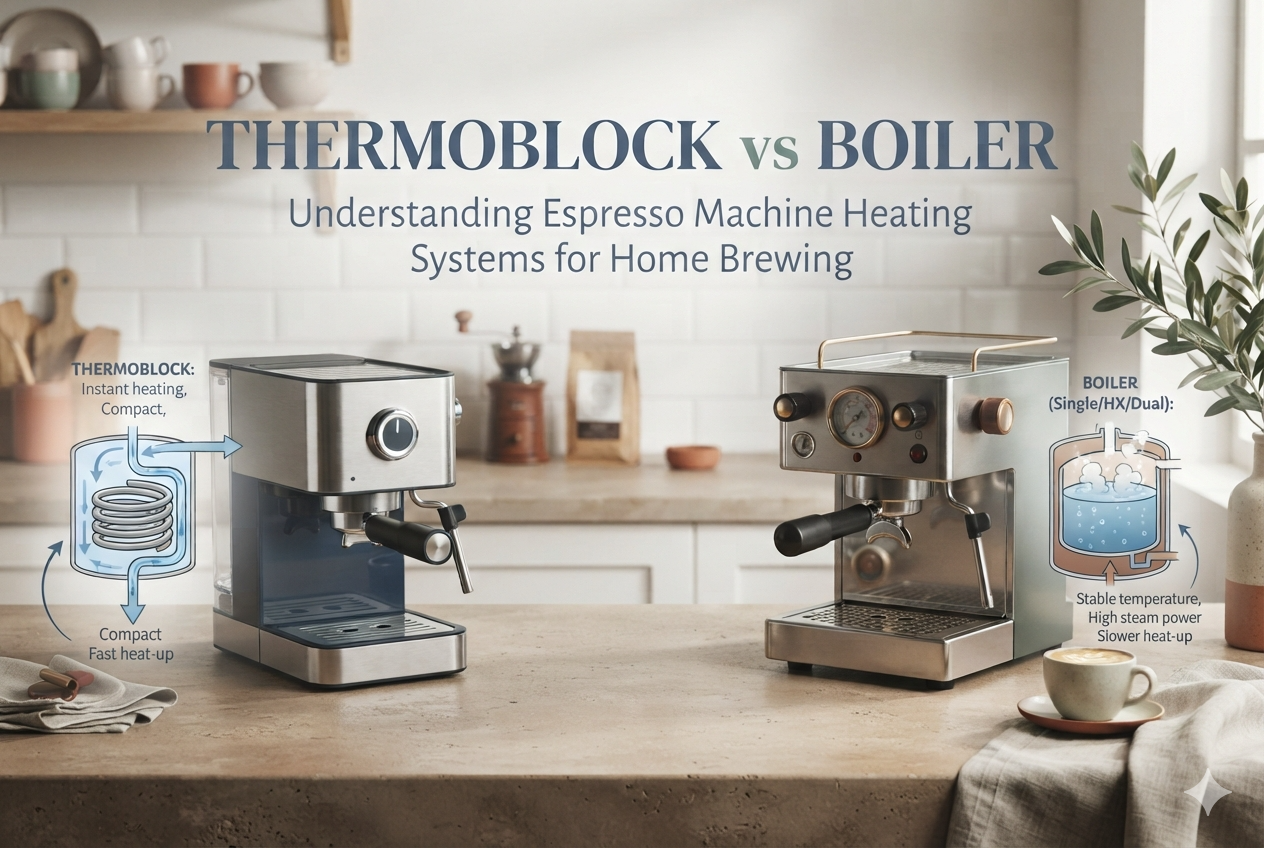
When an espresso machine claims 45-second fast heating, it is not only talking about speed. It represents a different approach to coffee machine engineering. Understanding the difference between Thermoblock vs Boiler heating systems helps coffee lovers choose the right machine based on warm-up time, temperature stability, and brewing habits.
Behind every cup of espresso is an espresso machine heating system responsible for three essential tasks:
- Heating water to the right temperature
- Maintaining temperature stability during extraction
- Delivering consistent flavor from one cup to the next
Most home espresso machines today use one of two heating approaches:
- Thermoblock heating system (instant heating)
- Boiler heating system (stored heating)
Neither technology is automatically better. The right choice depends on how you drink coffee, how many cups you make daily, and whether milk-based drinks are part of your routine.
Before choosing a heating system, buyers should first understand different espresso machine types, as different machine designs require different approaches to heating, brewing, and temperature management.
1. What Happens Inside an Espresso Machine Before Brewing?
Before coffee extraction begins, the machine needs to solve a basic challenge:
Coffee brewing requires hot water, but not just any hot water.
For espresso, water temperature affects:
- Coffee extraction speed
- Aroma release
- Bitterness and acidity balance
- Crema quality
A temperature difference of only a few degrees can change the final taste.
Therefore, a good espresso machine needs a heating system that can quickly heat water while keeping temperature fluctuations under control.
This is where Thermoblock, boiler systems, and temperature sensors such as NTC come into play.
2. Thermoblock: How Does Instant Heating Work?
The idea behind Thermoblock is simple:
Heat water only when you need it.
Unlike traditional boilers that continuously heat stored water, a Thermoblock system heats water as it flows through a heated metal channel.
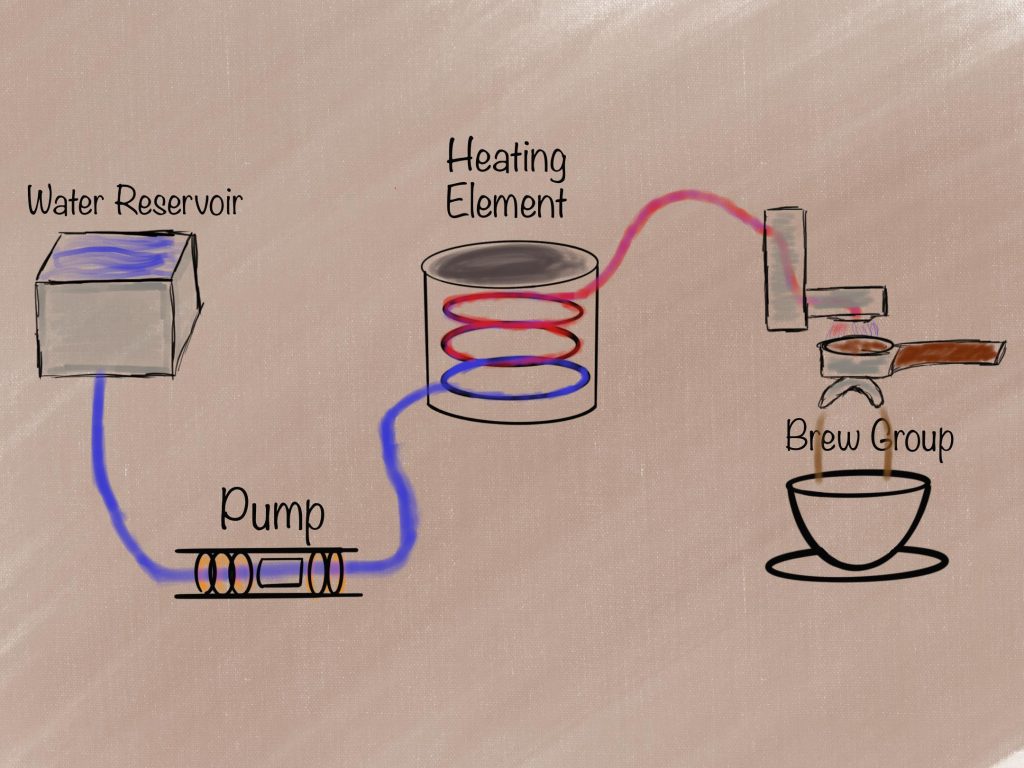
Thermoblock working process:
- Water is pumped from the water tank
- Water flows through the internal heating block
- The heating element rapidly transfers heat
- Hot water reaches the coffee brewing system
Why can Thermoblock machines heat faster?
Because they do not need to heat a large amount of stored water.
A traditional boiler may need to warm:
- The water inside the tank
- The metal boiler body
- Connected components
A Thermoblock only heats the small amount of water required for the current brewing process.
That is why many home Thermoblock espresso machines can reach brewing temperature within around 30–60 seconds, depending on design and control system.
3. Boiler System: Why Do Many Professional Machines Still Use Boilers?
A boiler works in the opposite way. Instead of heating water instantly, it stores heated water inside a dedicated chamber.
This traditional design is commonly found in a boiler espresso machine, where a built-in boiler maintains a supply of hot water for brewing and steam production.
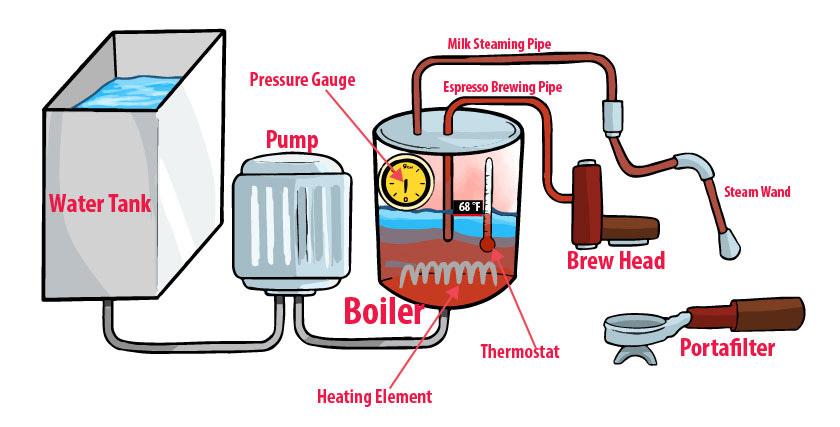
Boiler working process:
- Water enters the boiler
- Heating element raises the boiler temperature
- Hot water is stored and ready
- Brewing system draws water when needed
The biggest advantage of a boiler is thermal stability.
Because the boiler stores heat, it has more thermal mass. When cold water enters during brewing, the temperature changes more slowly.
This makes boiler systems popular for:
- Commercial espresso machines
- Coffee shops
- Users making multiple milk drinks continuously
However, the trade-off is clear:
More stored heat = longer warm-up time.
4. Thermoblock vs Boiler: Which One Is Better?
The answer depends on your coffee habits.
For quick daily coffee: Thermoblock has advantages
Choose Thermoblock if you:
✓ Drink 1–3 cups per day
✓ Usually make espresso or Americano
✓ Want coffee quickly before work
✓ Prefer a compact machine
✓ Do not want long waiting times
A 45-second warm-up means:
Wake up → turn on machine → prepare coffee → enjoy espresso.
The machine fits naturally into a busy lifestyle.
For milk coffee lovers: Boiler may be better
Choose boiler if you:
✓ Frequently make cappuccino or latte
✓ Prepare several cups for family or guests
✓ Need stronger steam performance
✓ Care about traditional barista workflow
The stored heat allows more stable steam generation, especially during repeated milk frothing.
5. What Is NTC Temperature Control and Why Does It Matter?
Many buyers see terms like:
- NTC sensor
- PID control
- Temperature monitoring
but do not know what they actually mean.
The easiest way to understand:
NTC is the coffee machine’s thermometer.
NTC (Negative Temperature Coefficient thermistor) is a temperature sensor that detects changes in heat and sends information to the control system.
Think of it like this:
| Component | Function |
|---|---|
| Heating element | Creates heat |
| Thermoblock / Boiler | Transfers and stores heat |
| NTC sensor | Measures temperature |
| Control system | Adjusts heating |
Without temperature feedback, the machine only heats blindly.
With NTC monitoring:
- The machine knows current temperature
- Heating power can be adjusted
- Temperature fluctuations can be reduced
This is especially important for compact Thermoblock machines because they rely more on precise control instead of large thermal mass.
6. Does Faster Heating Mean Worse Espresso?
A common misunderstanding is:
“Fast heating means lower coffee quality.”
This is not necessarily true.
Modern home espresso machines improve performance through:
- Better heating materials
- Improved water channels
- Temperature sensors
- Intelligent control systems
The heating system is only one part of espresso quality.
A great espresso also depends on:
- Coffee beans
- Grinding consistency
- Brewing pressure
- Water quality
- Extraction time
A well-designed Thermoblock machine can deliver excellent home coffee when the system is properly engineered.
7. How Long Should a Home Espresso Machine Take to Heat Up?
Typical warm-up experience:
| Heating System | Approximate Experience | Best For |
|---|---|---|
| Thermoblock | Around 30–60 seconds | Fast daily coffee |
| Advanced Thermoblock | Under 1 minute | Smart home espresso |
| Single Boiler | Several minutes | Espresso enthusiasts |
| Dual Boiler | Longer preparation but stronger performance | Heavy milk coffee users |
The important question is not:
“How fast is the machine?”
but:
“Does the machine match my coffee routine?”
8. How Should Buyers Choose a Home Espresso Machine?
Before purchasing, ask these questions:
Question 1:
How many cups do I make every day?
- 1–3 cups → Thermoblock is usually enough
- Multiple cups → Consider boiler systems
Question 2:
Do I mainly drink black coffee or milk coffee?
Black coffee:
→ Prioritize fast heating and temperature control
Milk drinks:
→ Prioritize steam capability and heat recovery
Question 3:
Is convenience important?
For many modern households, the best coffee machine is not the one with the most complex technology.
It is the one people actually use every morning.
A 45-second heating system removes friction and makes espresso part of daily life.
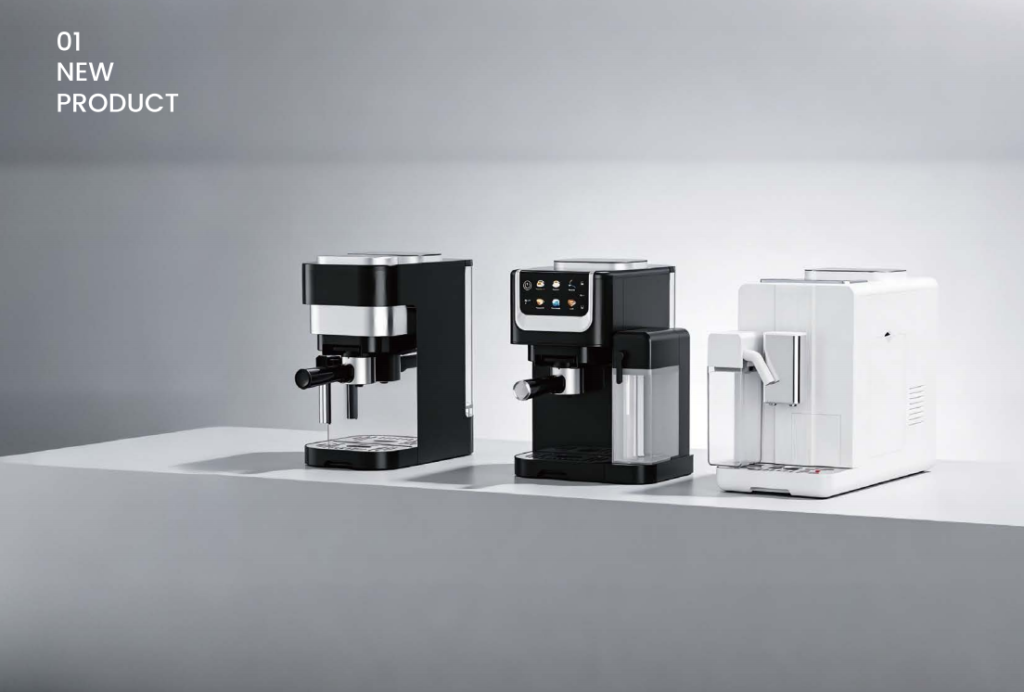
9. Huaguang Technology Perspective: Designing Coffee Machines Around Real User Needs
As a coffee machine manufacturer, Huaguang focuses on balancing:
- Fast heating experience
- Stable brewing temperature
- User-friendly operation
- Long-term reliability
Modern home coffee machines are no longer only about heating water.
They are about creating a consistent coffee experience through intelligent thermal management.
Technologies such as Thermoblock heating and NTC temperature monitoring help manufacturers create machines that are faster, smarter, and more suitable for today’s homes.
FAQ
Q1: Is Thermoblock better than boiler for home espresso?
Neither is universally better.
Thermoblock is ideal for users who want fast heating and daily convenience.
Boiler systems are better suited for users who need stronger steam performance and continuous brewing.
Q2: How long should an espresso machine preheat?
A Thermoblock espresso machine may be ready within about 30–60 seconds, while boiler machines generally require more time because they heat a larger thermal mass.
Q3: Does NTC temperature control improve coffee taste?
Yes, indirectly. NTC sensors improve temperature monitoring, helping the machine maintain more consistent brewing conditions.
Q4: Why does my espresso machine need to warm up before brewing?
Because the heating system, water path, and brewing components need to reach stable operating conditions for better extraction.
Conclusion
A 45-second preheat time is not just about saving time.
It represents a different philosophy of coffee machine design:
- Thermoblock focuses on speed and convenience
- Boiler focuses on thermal stability and continuous performance
- NTC focuses on intelligent temperature monitoring
For most modern households, the best espresso machine is the one that matches their daily coffee habits.
Fast, stable, and easy-to-use technology is what turns coffee making from a complicated process into an enjoyable daily ritual.