


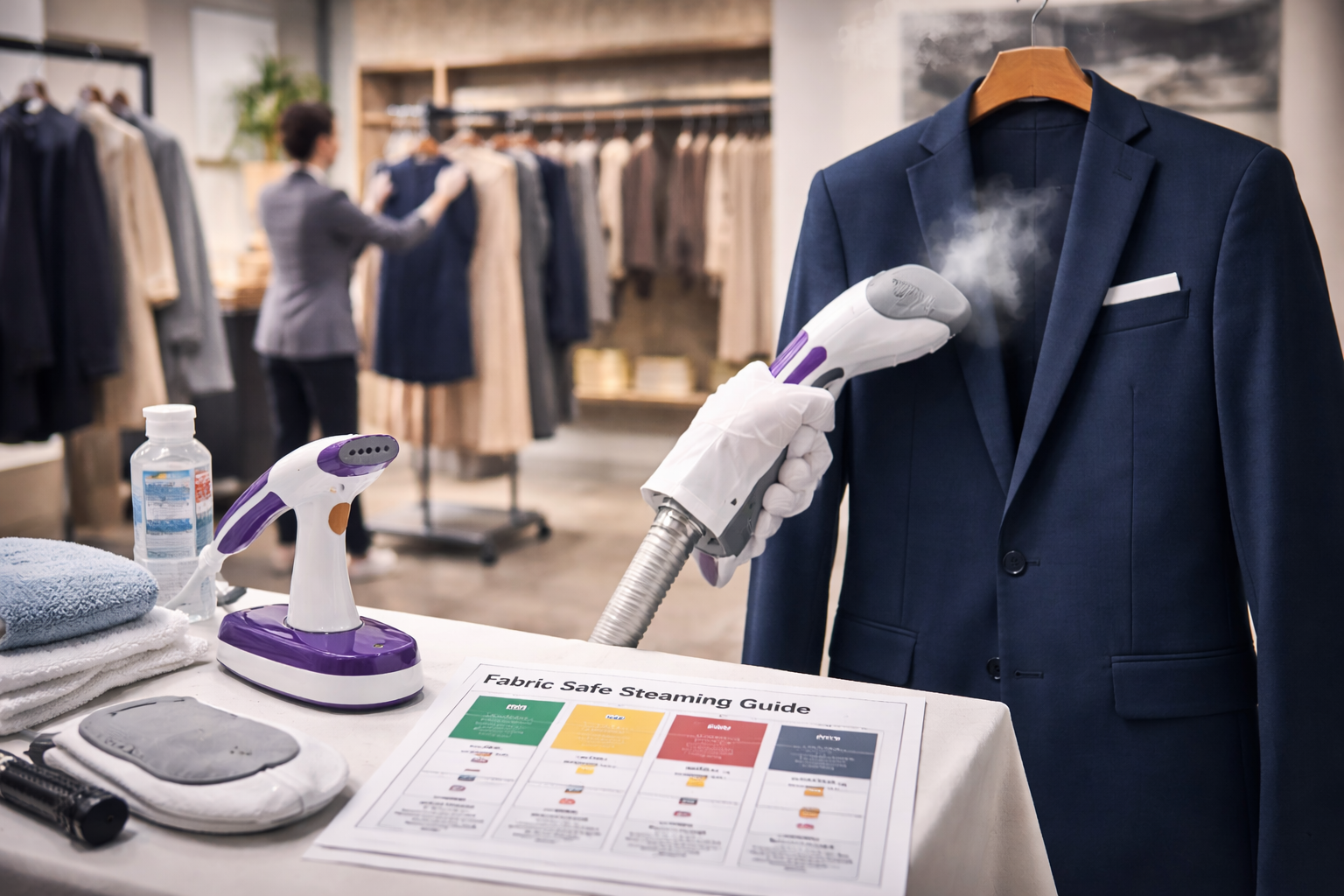
Hotels and apparel retailers love steam because it’s fast, but they fear fabric damage claims. The fastest way to reduce operational risk is a simple fabric-safe SOP: what to steam, what to avoid, and how to handle “detail zones” like buttons, pockets, and lapels. This guide is written for B2B buyers managing uniforms, merch displays, and multi-user environments using Huaguang garment steamers and steam irons.
The “Traffic-Light” Fabric Rules (Green / Yellow / Red)
Green (low risk, high frequency)
- Cotton shirts, polyester blends, uniforms, basic dresses
- Best practice: steady passes, keep fabric lightly tensioned
Yellow (needs technique)
- Wool coats, blazers, structured pieces
- Best practice: steam from the inside first when possible; don’t over-wet padded areas; allow cooling to set shape
Red (requires caution / test first)
- Very delicate silks, embellished fabrics, unknown coatings
- Best practice: test in an inside seam area; increase distance; use minimal moisture
Why this matters in B2B:
Most “damage claims” come from rushing and pressing too hard in red/yellow zones—especially around seams and decorative elements.
Detail Zones That Make a Uniform Look Premium (and How to Avoid Mistakes)
Buttons & fasteners
Avoid direct steaming on plastic buttons; steam around them and smooth the fabric.
Pockets
Steam pocket openings first, then corners. This stops curling and gives a clean silhouette.
Sleeves & cuffs
Inside first → outside finish. Let cuffs cool to keep a crisp edge.
Lapels & blazer roll
Steam underside to keep the lapel roll natural; avoid soaking the chest area.
B2B training tip:
Create a 1-page laminated guide at the steaming station:
- Fabric traffic light chart
- “Do/Don’t” list for buttons, lapels, cuffs
- 3-step workflow: hang → steam pass → cool-set


