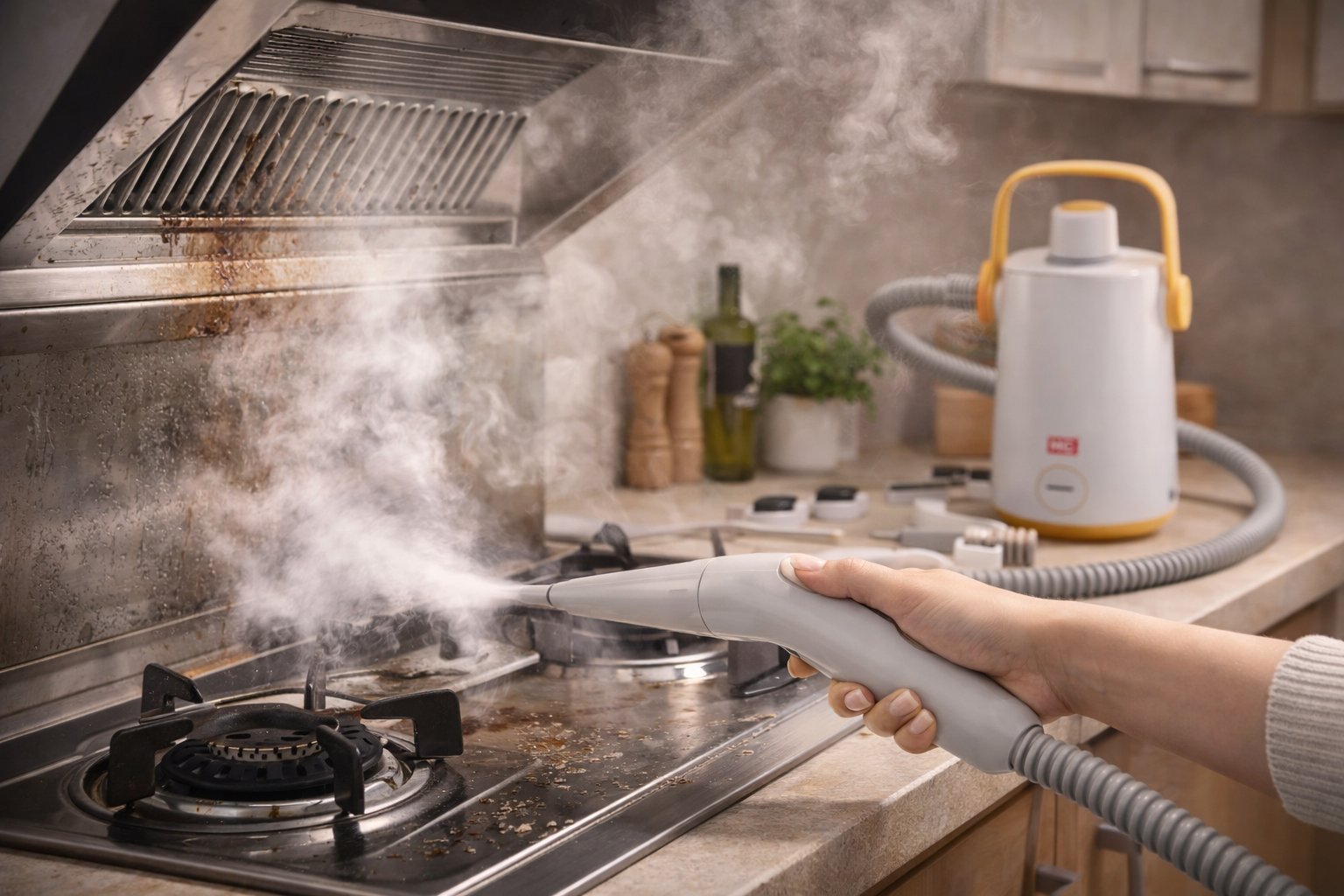
Kitchen mess builds quietly—grease film on cabinets, sticky stove edges, crumbs in seams—and suddenly the whole space feels “off.” This blog gives you a realistic steam cleaning routine to cut grease and grime with less scrubbing, plus a simple schedule so the kitchen stays fresh without weekend burnout.
Steam Cleaning Works Best When You Think “Soften + Remove”
Steam isn’t magic; it’s leverage. It softens grease film and loosens residue hiding in seams and edges, so wiping becomes easier. The mistake is expecting steam to “blast everything away” with zero follow-up. The winning mindset is:
- Soften the buildup
- Lift it with microfiber
- Finish dry so it doesn’t streak
This approach is especially helpful for:
- Stove edges and knobs
- Range hood surfaces
- Cabinet handles and corners
- Sink edges and faucet bases
- Tile grout lines behind the stove
A 20-Minute Steam Kitchen Reset (Stove → Counter → Handles)
Step 1: Stove edges (5 minutes)
Use a narrow nozzle to target the greasy seam lines. Short bursts soften residue. Immediately wipe with a folded microfiber cloth using the “edge” of the cloth like a squeegee. Repeat once for stubborn spots.
Step 2: Countertop and backsplash (6–8 minutes)
Work in zones. Steam briefly, wipe immediately. Don’t over-steam delicate surfaces—test first, keep moving, and finish with a dry wipe.
Step 3: Cabinet handles and high-touch spots (4 minutes)
Handles collect invisible grime. Steam lightly and wipe. You’ll be shocked how much comes off even when things “look clean.”
Step 4: Sink edges and faucet base (3 minutes)
Steam helps loosen soap film and residue around the faucet base where a sponge can’t reach well. Dry-wipe after to keep shine.
Step 5: The “stay clean” schedule
- Quick steam touch-ups on stove edges: 2–3 times/week
- Full 20-minute reset: weekly
- Deeper grout work: monthly
If you do “micro-cleans,” you avoid the dreaded “why is everything sticky?” weekend.
icro-cleans,” you avoid the dreaded “why is everyt