

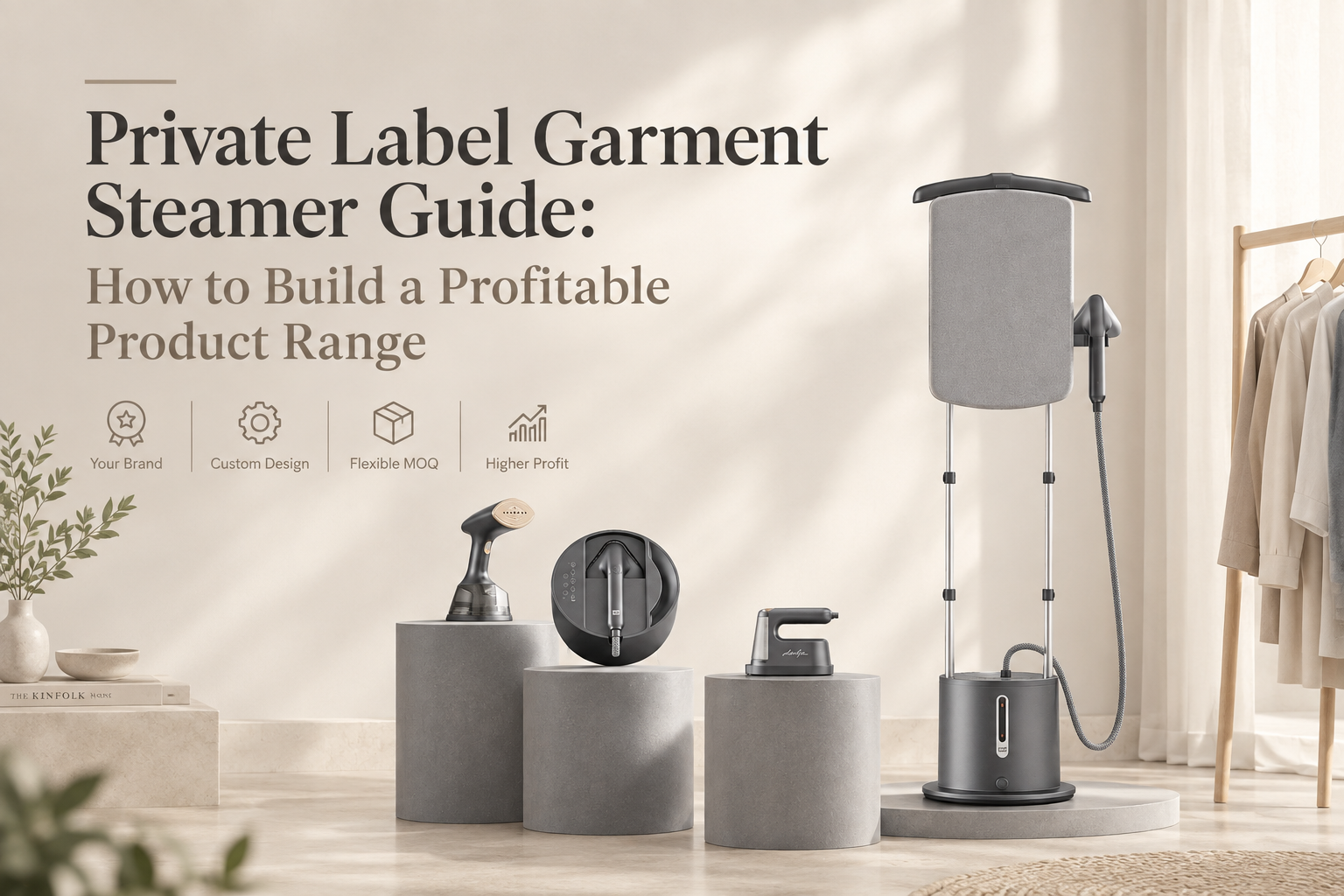
Launching a private label garment steamer range is not just about adding your logo to a single model. For B2B buyers and brand operators, the goal is to build a commercially coherent portfolio that covers different use cases, price points, and channels—from handheld travel steamers to standing garment steamers and steam irons.
This guide explains how to structure a private label garment steamer range, make sourcing decisions, and create a product line that supports long-term brand growth.
Start With the Market, Not the Machine
Before selecting a model, define the commercial role it will play in your range. A product can be attractive on its own but still fail if it overlaps too heavily with another SKU, misses the expected retail price, or requires after-sales capabilities your business does not yet have.
A practical product brief should answer:
- Who is the end user: frequent travelers, students, families, professional stylists, or hospitality operators?
- Where will the product be sold: e-commerce, home appliance retail, supermarkets, gift channels, distributors, or hospitality suppliers?
- What is the target retail price and expected wholesale margin?
- Which functions are essential: continuous steam time, heat-up time, water-tank capacity, fabric compatibility, vertical steaming, or ironing-board use?
- Which markets will be served, and what electrical specifications, plugs, labeling, and certifications are required?
For example, a compact handheld steamer may work well as an entry-level e-commerce product, but it will not replace a standing steamer for a family that regularly treats multiple garments or a hotel that needs fast turnaround between guests.
Build a Three-Tier Garment Care Range
A clear range architecture helps customers understand why each product exists. It also gives distributors and retailers a straightforward assortment across different budgets and usage needs.
| Product tier | Typical product types | End-user need | Commercial role |
|---|---|---|---|
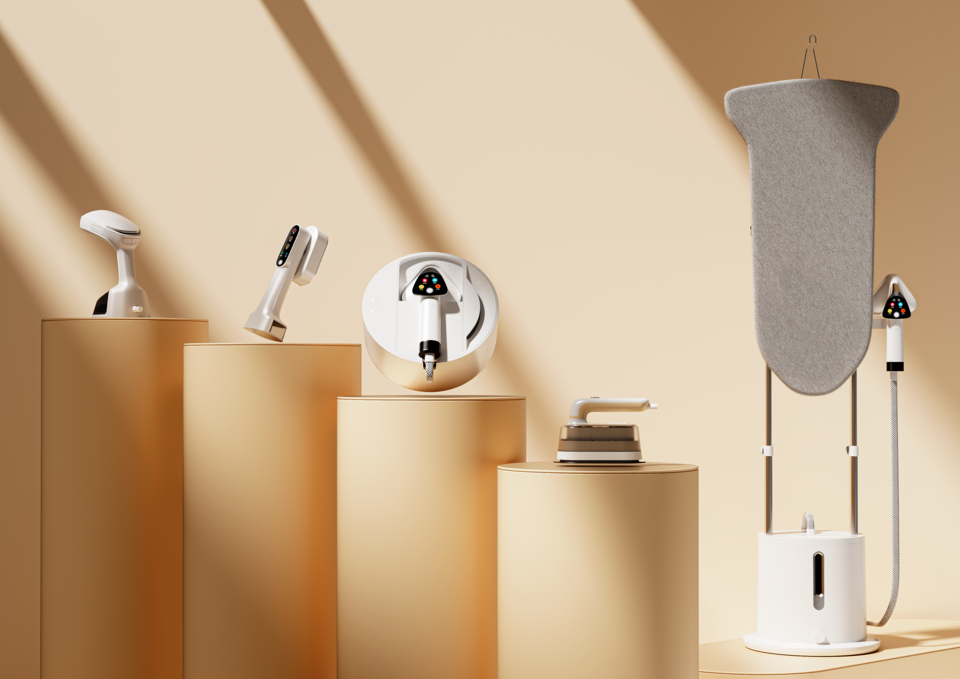
| Entry level | Handheld garment steamers | Portability, fast heat-up, easy storage, travel-friendly | Customer acquisition, promotions, gifting, online entry SKU |
| Mid range | Standing garment steamers, higher-power handhelds | Longer continuous steam, larger water tank, better fabric coverage | Core sales and margin product |
| Premium | Steam irons, advanced garment steamers with accessories | Precise ironing, sharp creases, multi-fabric care, professional results | Higher average order value and brand positioning |
Entry-Level: Make Adoption Easy
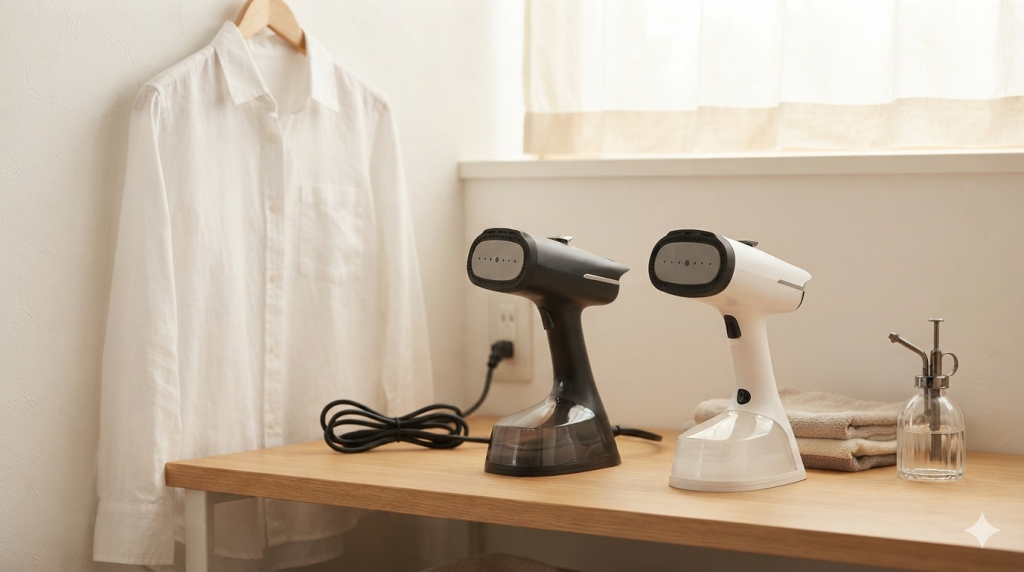
Entry-level handheld garment steamers reduce the barrier to purchase. They are most suitable for consumers who want quick wrinkle removal, have limited storage space, travel frequently, or are trying home garment care equipment for the first time.
For a private label launch, prioritize:
- Fast heat-up time and intuitive operation.
- Compact dimensions and manageable shipping weight.
- Clear fabric compatibility claims and safety features.
- Durable packaging suited to parcel delivery.
- A visual design that communicates your brand identity at a lower retail price.
These products can generate traffic and new customer acquisition, but the cost structure needs close attention. Low retail prices leave less room for expensive customization, high return rates, or complex warranty claims.
Mid-Range: Serve the Household and Frequent User
Standing garment steamers and higher-power handheld models target customers who treat multiple garments regularly—families, shared households, small boutiques, or hospitality operators. They offer longer continuous steam time, larger water tanks, and better coverage for dresses, coats, curtains, and upholstery.
A well-positioned mid-range model should have a clear product story. Do not rely on generic claims such as “professional quality.” Instead, communicate specific features and user benefits, for example:
- Continuous steam duration and water-tank capacity.
- Heat-up time and steam output (g/min).
- Hose length, pole adjustability, and stability of the base.
- Included accessories, such as fabric brushes, lint pads, crease attachments, or hangers.
- Safety features like auto shut-off, leak prevention, and overheat protection.
When comparing suppliers, test the steamer with different fabric types and garment lengths. Review steam consistency, water leakage risk, noise level, assembly quality, and ease of refilling—not only the specification sheet.
Premium: Sell Precision and Professional Results
Steam irons and advanced garment steamers target customers who want sharp creases, precise temperature control, and professional-looking results. They are especially relevant for business users, tailors, dry cleaners, hospitality laundry operations, and premium retail channels.
These products typically support higher retail prices because they combine multiple functions: precise temperature settings, steam burst, vertical steaming, soleplate quality, and in some models, advanced coatings or smart features.
However, premium models require more rigorous supplier assessment because they involve more components and greater service complexity. Confirm the following before placing an order:
- Soleplate material, coating, and hole pattern.
- Temperature range, accuracy, and fabric settings.
- Steam burst performance and continuous steam output.
- Water-tank design, filling access, and anti-drip or self-clean functions.
- Cord length, swivel design, and storage features.
- Availability of spare parts and service documentation.
- Warranty process, repair responsibility, and replacement-part lead times.
A high-value steam iron or advanced steamer can strengthen a brand, but a weak service plan can quickly damage it. Premium product planning must include after-sales operations from the beginning.
Choose OEM or ODM Based on Your Stage
The right development route depends on how much differentiation you need, how quickly you need to launch, and how much investment you can commit.
| Approach | Best for | What you can customize | Main consideration |
|---|---|---|---|
| OEM | Brands with a defined product specification | Components, functions, structure, tooling, materials, branding | Requires more development time, engineering input, and budget |
| ODM | Brands seeking a faster launch using an existing platform | Logo, colors, packaging, manuals, selected accessories | Product differentiation may be limited if competitors use the same platform |
| Ready-to-brand model | Early-stage or test-market launches | Branding, packaging, basic bundle configuration | Lowest development risk, but least exclusive |
For many brands, an ODM model is the practical starting point. Begin with a proven platform, validate demand, then invest in deeper product changes once sales data supports a more differentiated OEM project.
Assess a Garment Steamer Supplier Properly
A supplier should be assessed as a long-term product and quality partner—not only on quoted unit price. Garment steamers and steam irons combine electrical components, heating elements, water tanks, pumps or pressure systems, seals, and food-contact or fabric-contact parts. Quality problems often appear after repeated use, not at the first sample inspection.
Ask potential suppliers for evidence on:
- Factory quality-management processes and incoming-material controls.
- Product test procedures, including electrical safety, leakage, steam output, temperature stability, and endurance testing.
- Existing compliance documentation for your target region.
- Traceability for key components such as heating elements, thermostats, pumps, controllers, and water-contact materials.
- Sample lead time, production lead time, minimum order quantity, and capacity.
- Spare-parts list, unit pricing, and availability period.
- Defect handling, warranty support, and corrective-action procedures.
Request pre-production samples before mass production. A sample should be evaluated for real use, packaging performance, labeling accuracy, accessory completeness, and user instructions—not merely approved for appearance.
Plan Compliance and Localization Early
Compliance needs vary by product design and destination market. Do not assume that a report supplied for one version of a steamer or iron automatically covers your branded version, plug type, packaging, or destination country.
Your compliance review should include:
- Electrical voltage, frequency, plug, and cord requirements.
- Electrical safety and electromagnetic compatibility requirements.
- Water-contact material requirements for tanks, tubing, seals, and steam-path parts.
- Product labeling, warning labels, user manual language, and recycling markings.
- Packaging rules and local producer-responsibility obligations where applicable.
- Technical file retention and traceability requirements.
Confirm the applicable requirements with an accredited testing laboratory, qualified compliance consultant, or your importer-of-record team before production. This is particularly important when changing electrical components, water-contact materials, or the market configuration of an existing ODM model.
Create a Brand System Around the Steamer
Private label success comes from the total offer, not just the appliance. Your product should be easy to identify, purchase, use, maintain, and reorder.
Build consistency across:
- Product name and tiering, such as “Travel,” “Home,” and “Pro.”
- Machine color palette, finishes, and visible logo placement.
- Packaging structure and on-box feature hierarchy.
- Product-page images, video demonstrations, FAQs, and setup guides.
- User manual, quick-start guide, cleaning instructions, and warranty registration.
- Compatible accessories and consumables, such as distilled water recommendations, brush heads, or ironing mats.
A simple range can also create cross-sell opportunities. Pair a handheld steamer with a travel pouch, fabric brush, and lint remover. Pair a standing steamer with extra hangers, garment bags, and cleaning accessories. Pair a steam iron with an ironing board, spray bottle, and heat-resistant mat.
Build the Launch Assortment
For a first private label garment steamer launch, avoid starting with too many overlapping models. A focused assortment is easier to source, market, forecast, and support.
A practical starting structure is:
- One entry-level handheld steamer to create accessible demand.
- One standing steamer or high-power handheld as the core brand product.
- One premium steam iron or advanced steamer to establish a higher price anchor.
- A limited accessory and maintenance range to improve basket size and support post-purchase use.
This structure creates a clear upgrade path: customers can enter at a lower price, move into a more powerful or versatile steamer, or select a premium precision-focused product from the outset.
Final Takeaway
A profitable private label garment steamer range is built around clear customer segments, distinct price tiers, reliable sourcing, and a realistic after-sales plan. Start with a focused assortment, validate product-market fit, and use operational data—return reasons, customer reviews, service cases, and sell-through rates—to guide future product development.
The strongest brands do not compete only on steamer specifications. They make the buying decision simpler, set accurate expectations, provide clear support, and create a coherent garment care experience across products, accessories, and ongoing customer care.
Build Your Private Label Garment Steamer Range with Huaguang
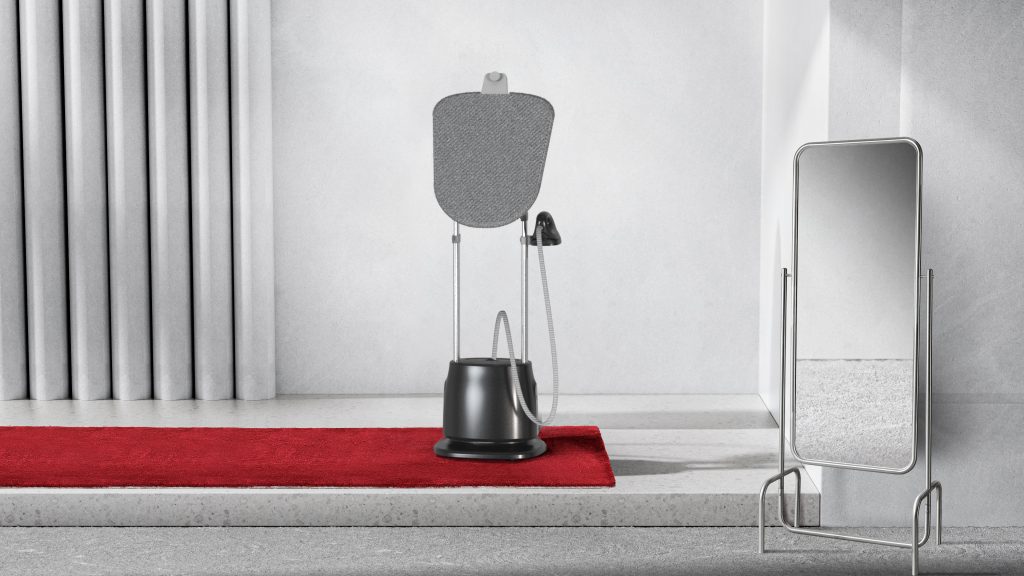
Huaguang offers a comprehensive garment care portfolio spanning handheld garment steamers, standing garment steamers, and steam irons. This range enables retailers, distributors, and private label brands to address multiple price points, usage occasions, and consumer preferences—from quick travel touch-ups to whole-household garment care and professional-level ironing.
By combining products across these categories, brands can build a clear “garment steamer product line” rather than relying on a single model. Huaguang can support product selection and range planning according to your target market, customer segment, channel positioning, and brand strategy—helping you create a more complete, scalable, and commercially differentiated garment care offering.


