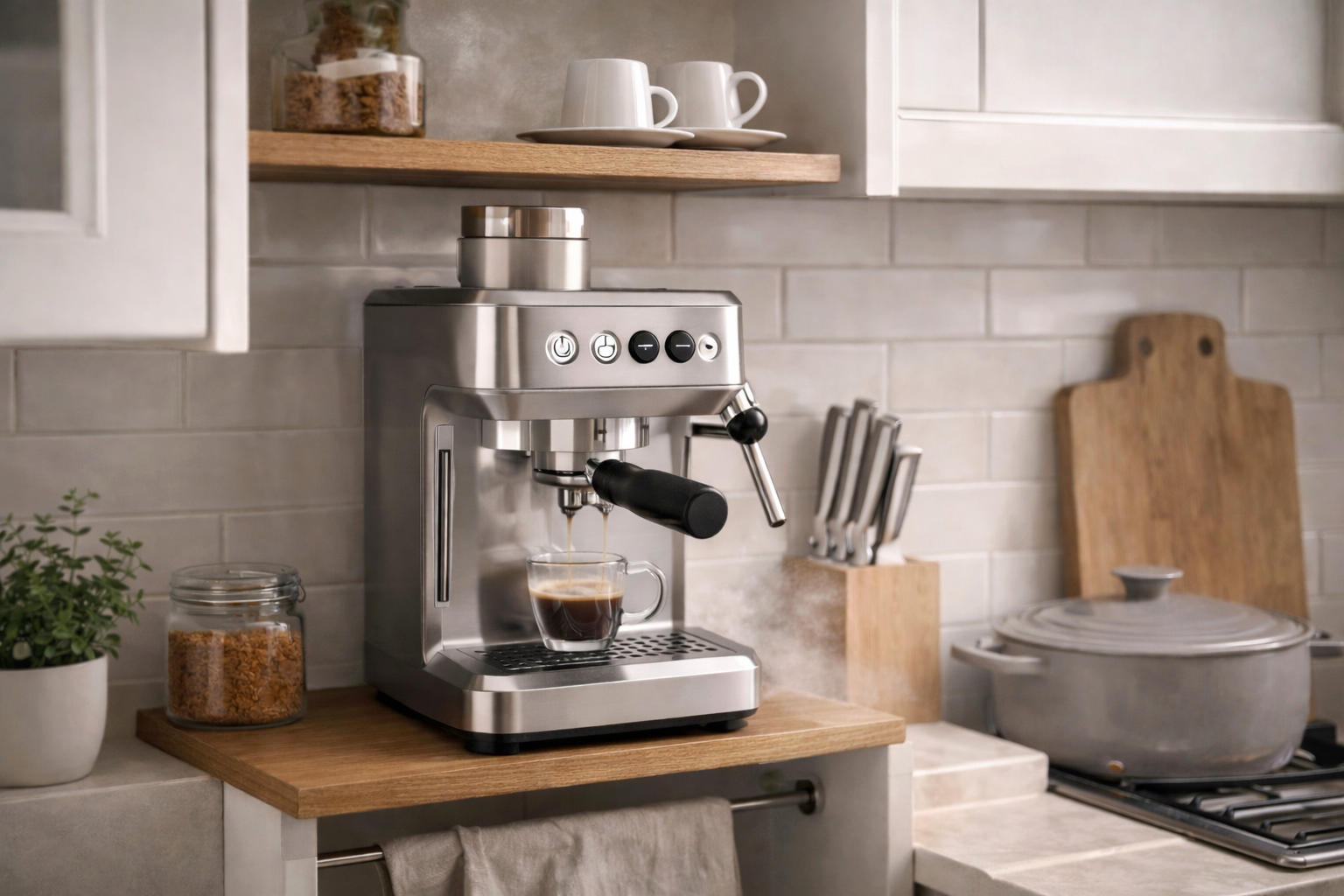
Small kitchens are real—and so is the struggle of appliances taking over the counter. This blog helps you choose a coffee machine that fits limited space while still delivering satisfying daily coffee. We’ll cover footprint, tank access, cleanup, and the “what you’ll actually use” mindset for apartments and compact homes.
The 4 Things That Matter More Than “Power” in a Small Kitchen
When counter space is limited, specs that look impressive on paper don’t matter as much as daily usability. These four factors decide whether your machine becomes a daily joy or a dusty decoration.
1) Footprint and shape
A tall, narrow machine can be easier to live with than a wide one. You want a unit that can sit near a wall without needing extra “open space” to function.
2) Water tank access
If refilling is annoying, you’ll procrastinate. Look for a water tank design that’s easy to remove, rinse, and refill without moving the whole machine. In small spaces, “can I refill this without gymnastics?” matters.
3) Drip tray and waste handling
Messy drip trays create odors. A removable tray that empties easily keeps your kitchen feeling clean—especially in apartments where smells linger.
4) Cleanup friction
Small kitchens punish messy routines. Choose a machine with fewer steps and an easy wipe-down surface.
Build a “Coffee Corner” That Doesn’t Take Over Your Home
Even if your kitchen is tiny, you can still have a satisfying coffee ritual—if you keep it compact.
The 3-item coffee corner
- Coffee machine
- One container (capsules or beans)
- A small cleaning cloth or brush
That’s it. If your setup requires five gadgets, it won’t survive in a small kitchen.
If you drink mostly black coffee
A compact coffee maker setup is often the easiest. Focus on consistent cup size and easy refilling.
If you love milk drinks
Milk is the mess multiplier. If you do lattes often, choose a setup where milk cleaning is simple—otherwise you’ll stop using the milk function.
A realistic buying rule
If you won’t clean it on a Tuesday morning, don’t buy it. Choose convenience first, then upgrade taste variables later.